In the UAE’s high-performance climate, your ceiling is far more than a decorative surface; it’s a critical component of your property’s thermal and structural integrity. Most property owners view a false ceiling primarily as an aesthetic upgrade, yet its role in managing energy efficiency and concealing essential services is far more significant. You’ve likely experienced the frustration of visible AC ducts and messy wiring, or perhaps you’re concerned about how the region’s humidity affects the longevity of your interior finishes. We recognize that a sophisticated space requires a solution that addresses these practical pains while delivering a flawless visual result.
This guide will help you discover how to enhance your property’s aesthetic appeal, thermal insulation, and lighting with the perfect false ceiling solution. We’ll examine the best materials for 2026, including fire-rated gypsum and moisture-resistant panels that comply with the latest Dubai Civil Defence standards. You’ll learn how to achieve a modern, seamless look that reduces noise and provides better thermal control, ensuring your renovation is both beautiful and compliant with Dubai Law No. (3) of 2026. We’ll preview the most durable design trends that turn a standard room into a high-performance environment.
Key Takeaways
- Understand how a false ceiling functions as a technical layer to conceal MEP services while providing a clean, modern finish to your structural slab.
- Compare the benefits of gypsum board for high-end residential interiors against Plaster of Paris (POP) for more intricate, ornamental design work.
- Learn to select specialized materials that manage acoustic echo and resist the high humidity levels common in the UAE climate.
- Discover the critical steps for integrating HVAC diffusers and bespoke lighting systems to ensure optimal airflow and aesthetic impact.
- Identify professional installation and finishing techniques that prevent surface cracks and ensure long-term structural integrity.
The Fundamentals of False Ceiling Design in the UAE
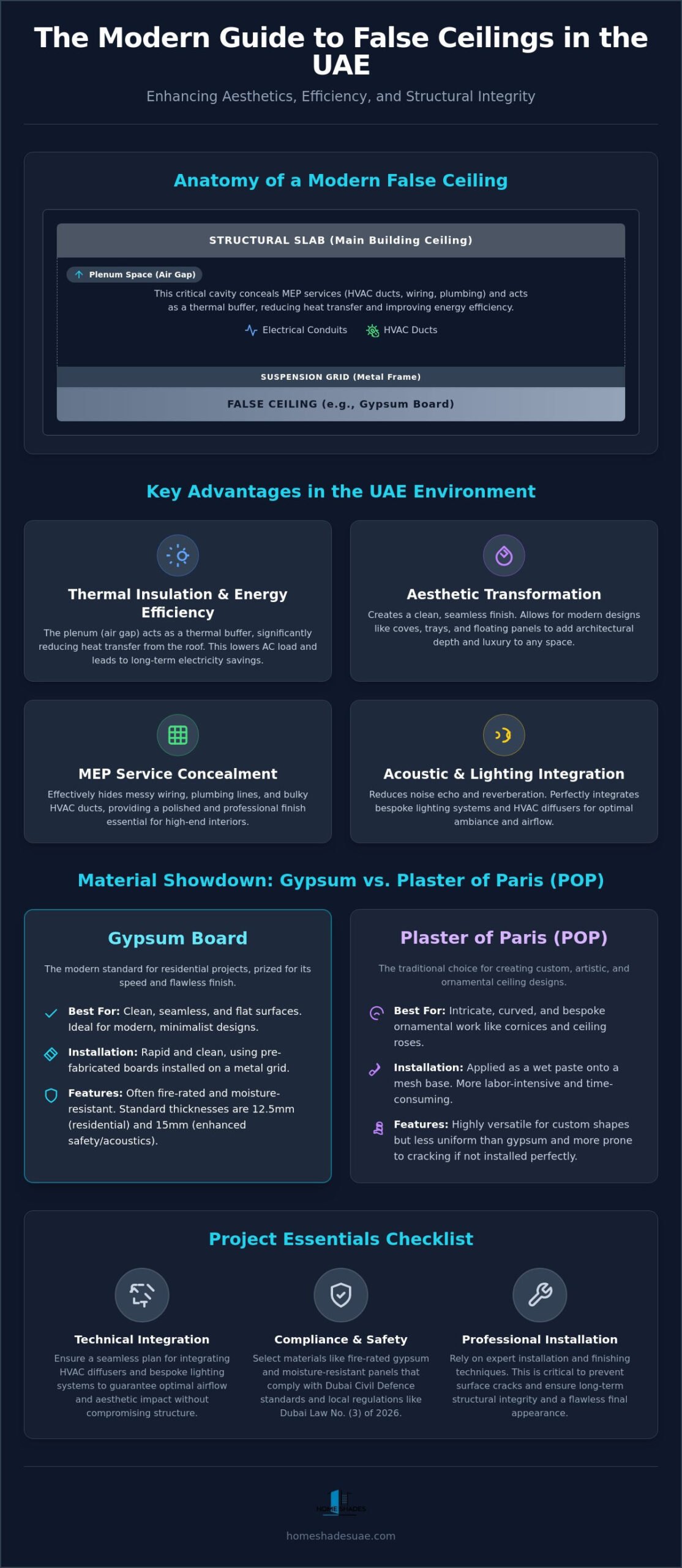
A false ceiling is essentially a secondary surface suspended below the main structural slab of a building. Often referred to as a dropped ceiling, this architectural feature serves as a critical functional layer in modern UAE construction. Its primary technical purpose is to provide a clean, accessible cavity for concealing MEP services. These include mechanical HVAC ducts, electrical conduits, and plumbing lines. Without this layer, these systems would remain exposed and detract from the interior’s professional finish. It’s the standard for any high-end fit-out.
Beyond concealment, these installations offer significant structural and environmental advantages. By creating a physical barrier between the living space and the concrete slab, a false ceiling allows for integrated lighting solutions and acoustic dampening. This technical performance makes it a staple in both commercial fit-outs and residential projects across the Emirates. It turns a raw shell into a finished, functional environment.
Thermal Insulation and Energy Efficiency
The extreme temperatures in the UAE demand intelligent climate control strategies. A suspended ceiling creates a strategic air gap that significantly reduces heat transfer from the roof or upper floors into the living area. The plenum is the enclosed space between the structural slab and the suspended ceiling used for air circulation and temperature regulation. This gap acts as a thermal buffer. This system reduces the overall AC load required to maintain comfortable indoor temperatures. Property owners often see a noticeable impact on long-term electricity savings as the HVAC system operates more efficiently. The plenum space also allows for the installation of additional insulation materials, further shielding the interior from the intense sun. It’s a practical investment in sustainability.
Aesthetic Transformation and Space Modification
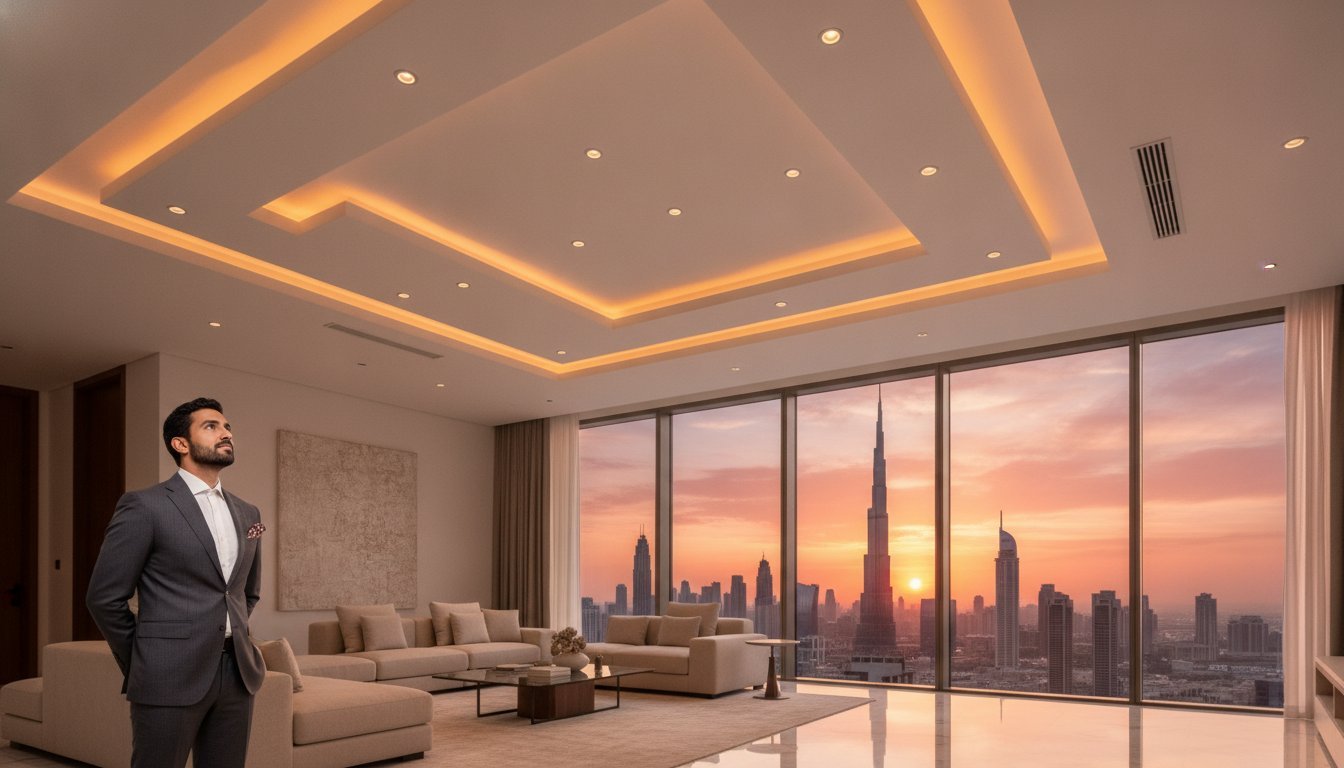
Designers use false ceilings to manipulate the perception of space and define functional zones within open-plan layouts. In large villas, varying the ceiling heights can subtly separate a dining area from a formal lounge without the need for restrictive walls. This technique creates a sense of luxury and architectural depth that flat ceilings can’t achieve. These systems are a cornerstone of modern villa renovation Dubai projects. Homeowners seek to modernize older structures with sleek silhouettes and recessed lighting. By integrating coves, tray designs, or floating panels, you can transform a dated room into a sophisticated environment. This combination of technical concealment and creative elegance ensures the ceiling contributes to the room’s overall atmosphere. It’s about creating a cohesive, professional look.
Primary Materials for Modern Suspended Ceilings
Choosing the right material for a false ceiling is a technical decision that influences everything from fire safety to the final aesthetic finish. In the UAE market, your choice usually depends on whether the project is a high-traffic commercial space or a luxury residential villa. While some materials prioritize installation speed, others focus on durability in humid conditions or high-end ornamental detailing. It’s about finding the right balance between performance and style.
Commercial environments often require metal ceilings for their industrial longevity and ease of access to overhead MEP services. These systems are incredibly durable and resist the wear and tear of office environments. Conversely, spaces that require precision sound control, like home cinemas or executive boardrooms, rely on specialized panels. Acoustical ceiling materials such as mineral fiber or fiberglass are specifically designed to absorb sound waves and reduce echo in large, open-plan areas. They provide a quiet, professional atmosphere that standard materials can’t achieve.
Gypsum and POP: The Versatile Residential Classics
Gypsum board remains the most popular choice for residential interiors because it provides a perfectly seamless, flat surface. These pre-fabricated boards allow for a rapid installation process compared to traditional wet-plaster methods. Modern gypsum systems are often fire-rated, with 12.5mm being the standard thickness for most homes, while 15mm boards are specified where enhanced safety or acoustic performance is required. Plaster of Paris (POP), however, is the superior choice for bespoke, ornamental designs. Since POP is applied as a paste and shaped on-site, it’s ideal for creating the intricate cornices and domes found in luxury majlis or foyer designs. It takes longer to cure but offers a level of handcrafted craftsmanship that pre-cut boards simply can’t match.
PVC and Wood: Alternative Aesthetic Finishes
While gypsum is versatile, specific zones in a home require more specialized solutions. PVC ceilings are an excellent moisture-proof option for utility areas, laundry rooms, or bathrooms where humidity levels are consistently high. They don’t warp or harbor mold, making them a low-maintenance alternative for wet zones. On the other hand, wooden baffles and panels are trending in contemporary UAE interiors to add warmth and organic texture. These systems can be integrated with custom joinery to create a sophisticated, high-end look that complements modern furniture. If you’re planning a full interior update, our team provides comprehensive false ceiling & POP work to ensure every material is installed to the highest technical and safety standards.
Evaluating Acoustics, Moisture Resistance, and Durability
A high-quality false ceiling must perform reliably under the specific environmental stresses of the UAE. Beyond the visual appeal discussed in previous sections, the technical specifications of your installation determine its long-term durability. Fire safety is the most critical parameter. All materials must comply with the UAE Fire and Life Safety Code of Practice. For instance, gypsum boards often require BS EN 520 certification to ensure they meet the necessary fire classification standards. Using fire-rated assemblies in escape corridors and stairwells is not just a design choice; it’s a regulatory requirement.
Structural integrity is another vital consideration for any suspended system. To prevent sagging over time, the suspension grid must be engineered to support the weight of the boards along with any integrated MEP services. We utilize heavy-duty galvanized steel grids and precision-engineered brackets to ensure the surface remains perfectly level. This methodical approach prevents the hairline cracks and surface irregularities that often plague inferior installations. It’s about building a foundation that lasts for decades.
Moisture Resistance for Kitchens and Bathrooms
Standard gypsum is highly porous and will eventually fail in high-moisture environments. In areas like kitchens and laundry rooms, the core material must be specifically treated to resist water absorption. This is especially important in small bathroom renovation Dubai projects where limited space can lead to rapid steam buildup. Using moisture-resistant “green-board” prevents the material from softening and significantly inhibits mould growth. We integrate these panels with high-performance ventilation systems to ensure the plenum space remains dry and structurally sound. It’s a technical necessity for any wet zone.
Soundproofing and Acoustic Management
Large living rooms with tiled floors often suffer from excessive echo and poor speech clarity. A well-designed false ceiling can resolve these issues by incorporating specialized acoustic absorption materials. There’s a technical difference between sound absorption, which reduces echo within a room, and sound insulation, which blocks noise from other floors. For home offices or dedicated media rooms, we often recommend perforated panels that effectively trap sound waves. The Noise Reduction Coefficient (NRC) rating guides material choice; a higher NRC value indicates superior sound absorption performance. By selecting materials with the correct NRC rating, you can create a quiet, acoustically balanced environment that enhances your property’s overall comfort. It delivers a premium auditory experience.
Technical Integration: AC, Lighting, and Electrical Systems
A sophisticated false ceiling acts as the central nervous system of a modern interior. It provides the necessary housing for complex technical systems while maintaining a clean, architectural aesthetic. Integrating these elements requires more than just design skill; it demands a deep understanding of MEP (Mechanical, Electrical, and Plumbing) coordination. From recessed LED strips that provide ambient warmth to structural reinforcements for heavy chandeliers, every cut-out must be planned with precision to avoid compromising the ceiling’s load-bearing capacity. It’s a technical balancing act that defines the room’s functionality.
Smart lighting systems often involve a dense network of drivers and controllers. We ensure these components remain hidden but accessible through strategically placed access panels. These panels are essential for long-term maintenance, allowing technical teams to reach junction boxes, fire alarm sensors, and plumbing valves without damaging the finished surface. We also incorporate recessed curtain pockets into the perimeter of the ceiling. This design detail hides the tracks and motorization units, creating a seamless floor-to-ceiling drapery look that is a hallmark of luxury residential fit-outs. It’s these technical details that separate a basic installation from a premium one.
Optimising Air Conditioning and Ventilation
In the UAE, the performance of your HVAC system is directly tied to your ceiling design. The height of the installation influences air circulation patterns and the speed at which a room cools down. Linear slot diffusers have become the preferred choice for minimalist interiors, replacing bulky traditional vents with slim, unobtrusive channels that deliver high-velocity airflow. Effective thermal management requires close coordination with the best ac service providers during the early framing stages. This collaboration ensures that ductwork is properly insulated and that diffusers are placed to eliminate hot spots, maximizing both comfort and energy efficiency. It ensures your cooling system works with your design, not against it.
Electrical Safety and Concealed Wiring Standards
Modern homes in Dubai and Abu Dhabi increasingly rely on integrated smart technology, which significantly increases the volume of cabling within the ceiling cavity. It’s imperative that all electrical work follows local safety regulations to prevent fire hazards and ensure system reliability. This includes proper cable management using conduits and ensuring that smoke detectors and fire sprinklers are accurately positioned within the ceiling grid. Our technical teams prioritize these safety standards, ensuring that every wire is secured and every sensor is fully operational. If you’re ready to upgrade your property’s infrastructure, our team provides the technical expertise needed for a professional interior fit-out that integrates all your essential services.
Installation and Long-term Maintenance Strategies
A professionally installed false ceiling can last between 15 and 20 years, but achieving this lifespan requires technical precision during the initial fit-out and disciplined maintenance thereafter. The process begins with a robust framing stage where galvanized steel channels are secured to the structural slab. This framework must be perfectly level to ensure the final surface doesn’t appear skewed or uneven. Once the boards are fixed, the jointing stage becomes critical. We use high-performance jointing compounds and fiber tapes to bridge the gaps between panels, creating a monolithic surface that resists the structural movements of the building. This methodical approach ensures a seamless transition between the ceiling and walls.
The Professional Installation Process
Precision at the perimeter is the foundation of a successful installation. We use laser-leveling tools to set the perimeter channels, ensuring a perfectly flat finish across the entire room. After the boarding is complete, the jointing process involves multiple layers of sanding and application to eliminate visible seams. This meticulous approach prevents the surface from showing ghost lines where the panels meet. Final finishing involves professional painting and polishing, which doesn’t just provide color but also adds a protective layer against environmental moisture. This multi-stage process ensures the ceiling remains crack-free even as the building settles over time.
Maintenance Tips for a 20-Year Lifespan
To reach a 20-year operational life, the ceiling requires regular attention beyond simple dusting. For most gypsum surfaces, a soft microfiber duster is sufficient for routine cleaning. If a damp wipe is necessary, it must be done with a barely-moist cloth to avoid saturating the material. Addressing leaks immediately is the most effective way to prevent structural damage. If you notice a yellow water stain, it usually indicates a plumbing or AC leak in the plenum space discussed earlier. Regular AC deep cleaning is also vital; it prevents dust and microbial growth from accumulating above the ceiling panels, ensuring the air remains clean and the plenum stays dry. This preventative care extends the life of the material significantly.
Knowing when to repair versus when to replace is key to cost-effective property management. Minor hairline cracks or surface scuffs can often be resolved with professional polishing and spot-painting. However, if the boards show signs of sagging, extensive water damage, or mold infestation, it’s time to call a fit-out specialist for a full replacement. We provide a comprehensive range of maintenance services to ensure your installation remains safe and visually impressive. By following these structured strategies, you protect your investment and maintain the high standards of your interior environment.
Investing in a High-Performance Interior Infrastructure
Selecting the right false ceiling system is a fundamental step in ensuring your property remains energy-efficient and visually sophisticated. Throughout this guide, we’ve explored how proper material selection and technical coordination with AC and electrical systems create a durable, high-performance environment. You now understand that a successful installation relies on more than just aesthetics; it requires adherence to UAE fire safety codes and a commitment to long-term maintenance. By prioritizing structural integrity and moisture resistance, you ensure your interior stands the test of time in the region’s unique climate.
We’re ready to help you execute your vision with precision and professional care. Upgrade your interior with professional false ceiling and POP work from Home Shades. Our team provides turnkey fit-out solutions across the UAE, delivering expert technical integration with your existing services. We pride ourselves on high-quality finishing, including professional painting and polishing, to deliver a result that’s both technically sound and aesthetically flawless. Your journey toward a more refined and efficient living space starts with a solid foundation.
Frequently Asked Questions
What is the average cost of a false ceiling in the UAE?
Cost depends on material choice, design complexity, and the total square footage of the project. While basic gypsum installations are more budget-friendly, bespoke POP designs or metal baffles require a higher investment due to the specialized nature of the labor and materials. It’s best to request a technical site survey to get an accurate estimate tailored to your property’s specific dimensions and technical requirements.
Does a false ceiling make a room feel smaller or lower?
While it physically lowers the height by a few inches, a well-designed installation can actually make a room feel more spacious. By using multi-level “tray” designs and perimeter cove lighting, you create a sense of depth and architectural interest. Lighter colors and recessed features draw the eye upward, effectively counteracting any loss in physical height while adding a luxury feel to the interior.
Which material is best for a living room false ceiling?
Gypsum board is generally considered the best material for a living room false ceiling due to its perfectly smooth, seamless finish. It allows for modern recessed lighting and clean lines that match contemporary UAE villa styles. If your design requires intricate, handcrafted moldings or traditional domes, Plaster of Paris (POP) is the superior choice for its artisanal flexibility. Both materials provide excellent foundations for professional painting and polishing.
How long does the installation of a false ceiling usually take?
Installation timelines vary significantly based on the room size and the complexity of the chosen design. A standard residential room typically takes three to five days to complete, including the framing, boarding, and initial jointing stages. More intricate designs with multiple levels or integrated lighting pockets require additional time for precision finishing and curing. We prioritize a methodical approach to ensure the final surface is perfectly level and crack-free.
Can I install a false ceiling in a bathroom with high humidity?
You can certainly install a false ceiling in a bathroom, provided you select moisture-resistant materials. Standard gypsum will warp in humid conditions, so we use specialized “green-board” gypsum or PVC panels designed for wet zones. These materials prevent water absorption and inhibit mold growth. It’s also essential to integrate high-performance ventilation to manage steam and protect the structural integrity of the ceiling cavity over time.
How do I access the AC or electrical wiring once the ceiling is installed?
Access to hidden services is managed through strategically placed access panels or hatches. These are designed to blend into the ceiling’s aesthetic while providing a clear opening for technical teams to reach AC units, junction boxes, or plumbing valves. We position these panels near critical maintenance points identified during the design phase. This ensures that future repairs or deep cleaning can be performed without damaging the finished gypsum or POP surface.
What is the difference between Gypsum and POP ceilings?
The main difference lies in the application method and the final aesthetic result. Gypsum ceilings use pre-fabricated boards that are quickly screwed into a metal grid, making the process fast and relatively dust-free. POP is a powder that’s mixed into a paste and applied on-site, allowing for highly customized, ornamental shapes. While gypsum is ideal for modern, minimalist looks, POP is preferred for traditional, bespoke architectural details that require handcrafted precision.
Is a false ceiling fireproof?
Most modern materials used in the UAE are designed with fire safety in mind. Gypsum board naturally contains a small amount of water in its core, which helps it resist heat. However, for high-risk areas, you should specify fire-rated boards that comply with the UAE Fire and Life Safety Code of Practice. These specialized materials are tested to maintain their structural integrity for specific durations, providing critical protection for your property and its occupants.

Leave A Comment